
Receiving and elevated tanks
Both tank types may be included after capacity and location are confirmed.
Water storage tank cleaning
We coordinate shutdown and cleaning around the operating hours of buildings, factories, apartments and public facilities.
Telephone support is mainly in Japanese. For English, use the form or LINE.
Site inspection and quotations are free.
Both tank types may be included after capacity and location are confirmed.
The schedule and user notification are agreed before the tank is drained.
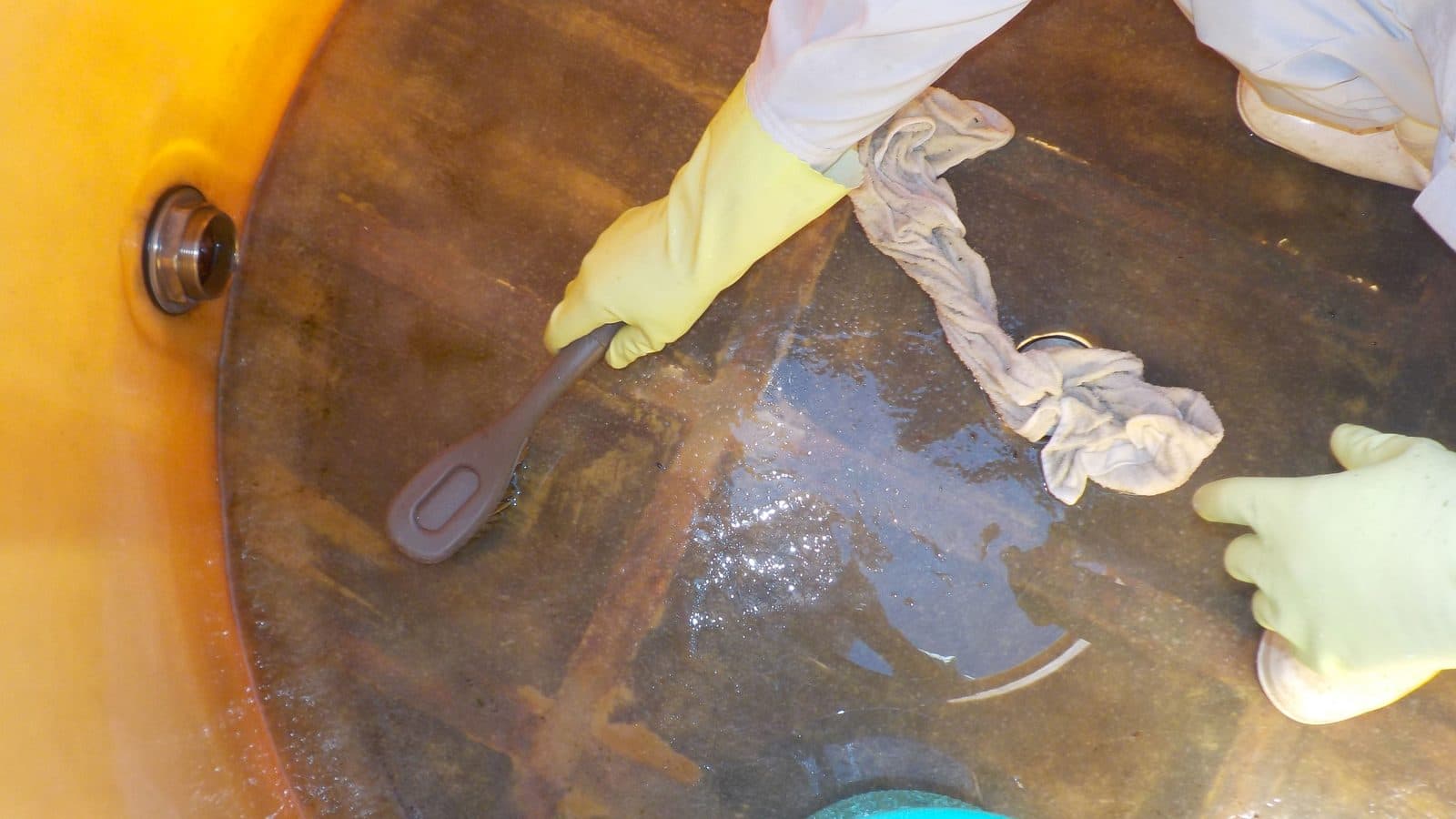
Before, during and after photographs record the work and observed condition.
Yukuhashi guidance calls for cleaning at least once a year for both simplified water-supply systems over 10 m³ and small-scale tank systems of 10 m³ or less.
Capacity, tank count, location, shutdown and reporting or testing scope affect the estimate.
They are separate services. A simplified water-supply system over 10 m³ also requires a management inspection by a registered inspection body.
Cracks, possible leakage, seals, insect screens and valves are reported; repairs are quoted separately.
We confirm tank capacity, number of tanks, access, water supply system and required report.
We agree the date, outage time and notices needed for occupants.
After isolating the supply, we drain the tank and inspect the interior condition.
We remove deposits, rinse and disinfect in the required order.
We refill, confirm the water supply and check for abnormalities.
Before, during and after photographs record the work and observed condition.
We coordinate the outage and building notice with the manager.
Tell us the number, capacity and supply arrangement so both can be planned together.
Confirm the format and destination before the work.
We record visible corrosion, cracks, fittings and other observed damage.
The tank size and whether both receiving and elevated tanks are included affect labour and time.
Roof, basement, narrow access and equipment-carrying routes are checked.
The required outage window and restoration procedure are included in the plan.
Photo reports, documents and any required water-quality test are quoted by scope.
We serve Yukuhashi, Kanda, Miyako, Buzen, Chikujo, Koge, Yoshitomi, Kitakyushu, Tagawa, Iizuka, Munakata, Fukuoka and Nakatsu. Ask us about nearby areas as well.
The required interval depends on the facility and applicable rules. We confirm the building and schedule rather than relying on a generic interval.
Usually yes. We agree the outage time and restoration procedure in advance.
No. Cleaning, inspection and water-quality testing have different scopes. We clarify what is required before quoting.
Yes. Tell us the number, capacity and supply arrangement so both can be planned together.
Yes. We can provide before, during and after photos and a work report in the agreed format.
We record visible corrosion, cracks and fitting deterioration. Repairs or specialist inspection are quoted separately when needed.
Before deciding on the cause or work needed, compare the pages closest to the signs you have noticed.
Share only the location, timing or photos you can safely confirm. We explain what to check and how pricing is decided before work.
Telephone support is mainly in Japanese. For English, use the form or LINE.